Off-site catering is a service in which the preparation, delivery, and serving of dishes are organized outside of a permanent restaurant: at the event venue, in an office, outdoors, or in a rented hall. This format allows for an event to be held in a convenient location while maintaining the level of service and a well-thought-out menu.
The key feature of off-site catering https://miamicateringonline.com is the need to plan logistics, storage and serving conditions, and venue requirements in advance. The more accurately the work plan is drawn up and the details are agreed upon, the higher the chance that guests will receive consistently high-quality dishes from the first to the last serving.
Off-site catering formats and their objectives
The choice of format depends on the purpose of the event, its duration, and the number of guests. Some options involve active service by staff, while others allow guests to move freely and choose their own dishes.
- A buffet is convenient for networking and short events; Emphasis on appetizers, individual desserts, and beverages.
- Banquet – suitable for celebrations; involves seating, course serving, and a high level of service.
- Coffee break – ideal for conferences and trainings; includes beverages, pastries, sandwiches, and fruit.
- BBQ/grill – popular outdoors and in rural locations; venue permits and safety requirements are important.
- Corporate lunches – regular office meals; consistent quality and adherence to the delivery schedule are important.
Summary: How to Link Event Format and Guest Number to a Service Model
Choosing a service model for off-premises catering always starts with two variables: the event scenario (dynamics, timing, seating requirements) and the number of guests (peak load, queue length, staffing and equipment requirements). The more precisely you describe the format and guest flow, the easier it is to create a working plan without sacrificing speed and quality.
The optimal model is one that simultaneously ensures guest comfort and manageability: predictable logistics, a sufficient number of serving points, clear navigation, stable food temperature, and timely replenishment. When in doubt, a hybrid approach wins: combining several formats within a single event.
Follow this principle: the more guests and the greater freedom of movement, the more necessary are distributed service points and pre-portioning; the higher the status and the longer the program, the more important are seating, synchronized courses, and a dedicated team for the room.
- Buffet – for short, dynamic events and social interaction; the number of stations and replenishment speed are critical.
- Banquet – for ceremonial programs and official speeches; Key parameters include seating, serving timing, and the service team.
- Coffee breaks – for business events; it’s important to streamline traffic, create convenient navigation, and reserve drinks.
- Cocktail/bar – for evening formats; queue management, a well-thought-out drink menu, and sufficient bar capacity are required.
- Show cooking stations/stations – for engagement and variety; time reserves and a separate space for security and communication are required.
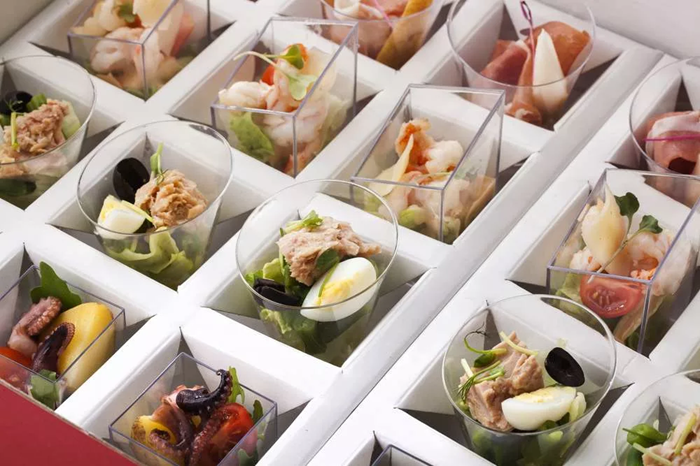
- Delivery of boxes/portion sets – for limited time or complex venues; Labeling, temperature, and distribution accuracy are important.
- Record the format, duration, program highlights, and venue restrictions.
- Evaluate guest flow: peaks, breaks, and the need for multiple service areas.
- Choose a model (or hybrid) and test it against four criteria: speed, comfort, quality control, and logistics.
If the resulting plan remains transparent to the guest and manageable for the team, then the service model has been chosen correctly and the event format has been assembled without unnecessary risks.