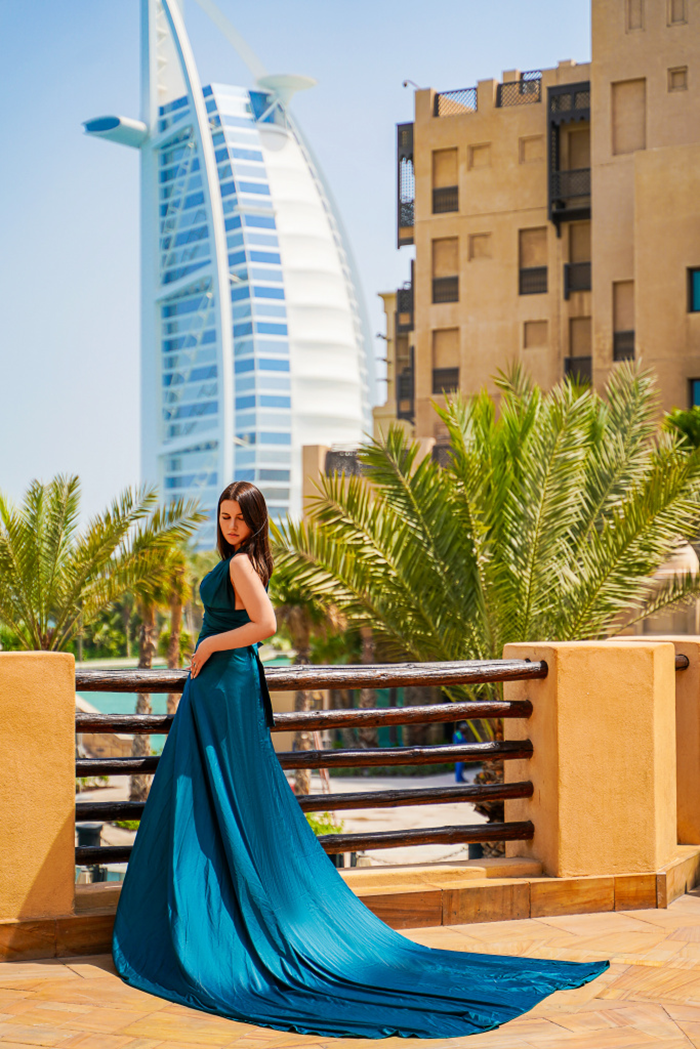
Dubai is a city of contrasts, where futuristic architecture stands side by side with sand dunes, and the soft morning light on the embankments gives way to the neon glow of skyscrapers in the evening. To ensure striking shots, it’s important to plan the location, time, and style in advance, as well as consider local regulations and climate.
Organizing a photo shoot in Dubai begins with the goal: a personal portrait, a love story, a family shoot, a fashion shoot, or a commercial project. The format determines the location, duration, makeup, props, and logistics, so a well-thought-out plan saves time and helps you achieve results without rushing.
Organization: Plan, Time, Style, and Details
The most advantageous times are early morning and before sunset: the light is softer, the shadows are more subtle, and the skin looks smoother without excess shine. During the day, the sun can be too contrasting, so in the middle of the day, it’s better to choose shaded locations, interiors, or shoot with reflectors.
Looks, Makeup, and Props
Clean silhouettes and bold materials work well in Dubai: linen, silk, satin, and suiting. Avoid prints that are too small, as they tend to be noisy in the frame. Makeup should be long-lasting and hold in place, and hair should be adjusted for wind and humidity.
- For the city: suits, sheath dresses, minimalist styles, statement accessories.
- For the desert: long flowing fabrics, monochrome, capes.
- For the sea: light dresses, oversized shirts, straw hats.
Rules, Ethics, and Safety
Respect personal boundaries: do not take close-up photos of people without their consent, especially near private property. Some locations may have restrictions on professional photography, the use of a tripod, or additional lighting—check the rules in advance to avoid stressful situations.
How to assemble a team and a shooting scenario
The optimal scenario is 2-3 locations in 2-4 hours to avoid overloading the day with travel and outfit changes. Create a shot list: portraits, full-length shots, details, action shots, and a cover shot. Discuss with the photographer the editing style, references, and key aspects: color, mood, posing, and level of retouching.
If you’re choosing a photographer based on recommendations or platforms, it’s helpful to check reviews and examples of photos at about lavradar in Dubai beforehand, then clarify the terms: turnaround time, number of photos, delivery format, and quick preview options.
Bottom line: a successful photoshoot in Dubai is a combination of the right lighting, well-thought-out logistics, and images that complement the chosen location. The clearer your goal and plan, the more freedom you feel in the frame and the more powerful the visual story.
Choosing the right time of day for a specific story: sunrise, golden hour, or night lighting
In Dubai, light changes the mood of a shot more than the location: the same beach, skyscrapers, or desert can look soft and airy at sunrise, cinematic during golden hour, and futuristic at night.
To avoid wasting time searching for the “right sun” on location, tie the story to a specific time of day in advance and allow for travel, parking, entrances, and security, especially at iconic sites.
What to choose and for what ideas
- Dawn – soft light, minimal crowds, a calm sea, and a clean background. Suitable for romance, family shots, yoga/fitness, minimalism, portraits without harsh shadows, and beach photography.
- “Golden Hour” (before sunset) – warm tones, volume, beautiful reflections on glass and sand. The best option for love stories, fashion, strolling scenes, “city + sun” shots, action, and silhouettes against the horizon.
- Night lighting – neon, reflections, architectural lines, the “Dubai by night” effect. Ideal for glamour, urban stories, high-contrast portraits, auto/luxury scenes, and shots by fountains, marinas, and panoramic views.
- Determine the purpose of the shot: tenderness and silence – dawn; warm “cinematic” – golden hour; Wow-effect and futurism – night.
- Choose a location based on the lighting: beaches and deserts reveal themselves in the morning/sunset; glass and skyscrapers are especially striking at sunset and at night; embankments are advantageous at night due to reflections.
- Plan your tempo: at dawn, you can capture more points without crowds; during golden hour, precise timing is crucial; at night, allow pauses to adjust the lighting and find the right angle.
Bottom line: choose the time of day not “out of habit,” but based on the story and emotion. Dawn creates purity and tranquility, golden hour creates warm expressiveness, and night lighting creates drama and futurism. The more precisely you connect your idea with specific lighting and logistics, the more reliably you’ll get cover-quality shots without rushing or accidents.