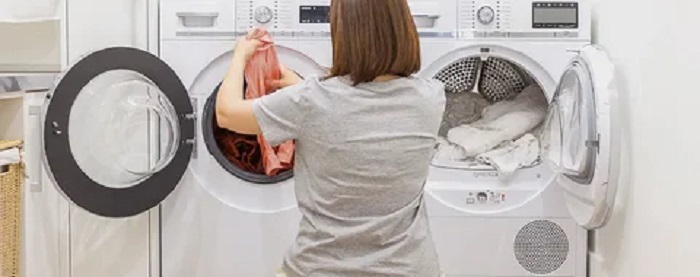
If your dryer is taking noticeably longer to dry, it’s almost always due to a problem with moisture extraction, insufficient heating, or improper loading conditions. As a result, laundry remains damp, energy consumption increases, and the dryer is working harder.
The problem can manifest itself in various ways: the cycle ends, but the laundry is cold and damp; drying takes hours; or the dryer continually extends the drying time due to humidity sensors. Below are the main causes and step-by-step solutions with electric dryer repair.
How to recognize slow drying by symptoms and settings
Don’t rely on “feeling,” but rather on recurring symptoms: the same load on the same setting should produce predictable results. If deviations persist for 2-3 cycles in a row, this is a signal to check the filters, ventilation, sensors, and selected settings.
Signs that drying is slower than normal
- The cycle has become noticeably longer with the same load and mode (the program “runs out” the time or often extends automatically).
- Clothes remain damp after completion, especially inside seams, waistbands, cuffs, or in pockets.
- The drum is hot, but the items are damp – there is heat, but the moisture is not removed (often due to poor ventilation/blockages or incorrect sensor operation).
- Items are dry on the outside, but “heavy” and cool on the inside – a sign of ineffective moisture removal or an overly dense/mixed load.
- High humidity in the room, fogging up of windows, a feeling of “dampness” near Machine.
- A damp smell in the laundry after drying or in the drum (moisture is trapped in the air duct, filters, or container).
- Frequent stops/pauses in operation or a noticeable drop in air flow intensity (indirectly indicates a blockage or overheating).
Key test: if the situation does not improve after cleaning the lint filter and emptying the condensate container, the problem is usually deeper than an “overfilled filter.”
How to tell if drying is slow by the modes
- Automatic modes by humidity (e.g., “Cupboard”, “Iron”): if the machine frequently increases the time, but the laundry is still not dry enough, it is likely due to dirty filters/condenser, poor airflow, improper loading, or a malfunctioning humidity sensor.
- Timed modes (by time): if, under usual After 60–90 minutes, the result has worsened. This often indicates a decrease in heating or air circulation efficiency (clogged air, weak airflow, heat exchange issues).
- Delicate/low-temperature programs: If “everything takes a long time” on these programs, this may be normal, but a symptom is that the situation is similar even on standard programs.
- Dense fabric modes (towels, bedding): when operating correctly, these take longer to dry, but dry reliably. If towels remain damp around the edges and in the folds during a normal load, blockages and insufficient airflow are most often the culprit.
- Mixed loads (delicate and dense): if delicate items are overdried while dense items remain damp, this is a typical “mode symptom” rather than a malfunction – a separate cycle or a different dryness level is needed.
Bottom line: Slow drying is recognized by a repeated increase in time, inconsistent dryness levels, and signs of poor moisture removal. If simple actions (cleaning the lint filter, checking the container/drain, loading correctly, and selecting a mode) do not restore normal speed within several cycles, it’s worth checking the ventilation, heat exchanger/condenser, and sensors, and, if necessary, contacting service.